Last year, I listened to a podcast called A Year to Change Your Life. The presenter was a psychologist, and for each ‘month’ in the title, she described a different psychological technique or method to achieve a positive outcome.
That all sounds rather vague, but it was better and more interesting than I made it sound. One of the methods she discusses, I think, was related to anger management and was called Dialectical Behavior Therapy (DBT) and Opposite Action Skill.
The gist was that if you feel compelled to react with anger, take a moment, then respond with kindness/concern, or remove yourself from the situation. That is the theory, anyway.
Where this crosses over with solo play is when we are creating NPCs. What if you apply this to some of your NPCs to make them a bit more interesting? For example, what would be a typical first reaction for a paladin facing evil beasties? I would assume it is to smite for all they are worth, but what if we flip that using opposite actions? Rather than wading in with sword and shield, their first or default action is to attempt to negotiate and engage with the creatures.
How about a cleric who expects people to heal themselves first, and only if they have exhausted all those avenues are they prepared to draw on their magic to heal?
Below are some examples I found on DBT and the Opposite Action Skill, just to use as a model. I am not saying that every NPC should be the opposite of what they typically are, but once in a while, maybe for recurring NPCs, these can make for some interestingly different characters.
- Anger prepares us to attack; it activates us to attack or defend.
Opposite show kindness/concern or walk away.
- Shame gets us ready to hide. It activates us isolate.
Opposite, raise your head, make eye contact, and keep your shoulders back.
- Fear gets us ready to run or hide. It activates us to escape danger.
Opposite go towards, stay involved in it, build courage.
- Depression gets us ready to be inactive. It activates us to avoid contact.
Opposite, get active.
- Disgust gets us ready to reject or distance ourselves. It activates us to avoid.
Opposite push through and get through the situation.
- Guilt gets us ready to repair violations. It activates us to seek forgiveness.
Opposite apologize and mean what we say.
Remember:
- 1 If we want an emotion to stick around or increase, continue to do the action as above.
- 2 If we want an emotion to go away or become less uncomfortable, do the opposite action.
- 3 If we want this skill to work, we must use opposite action all the way and believe that it will work.
How much use is this? I think that depends on how well it resonates with you. But, if you know the technique exists, then you can choose to use or ignore it.
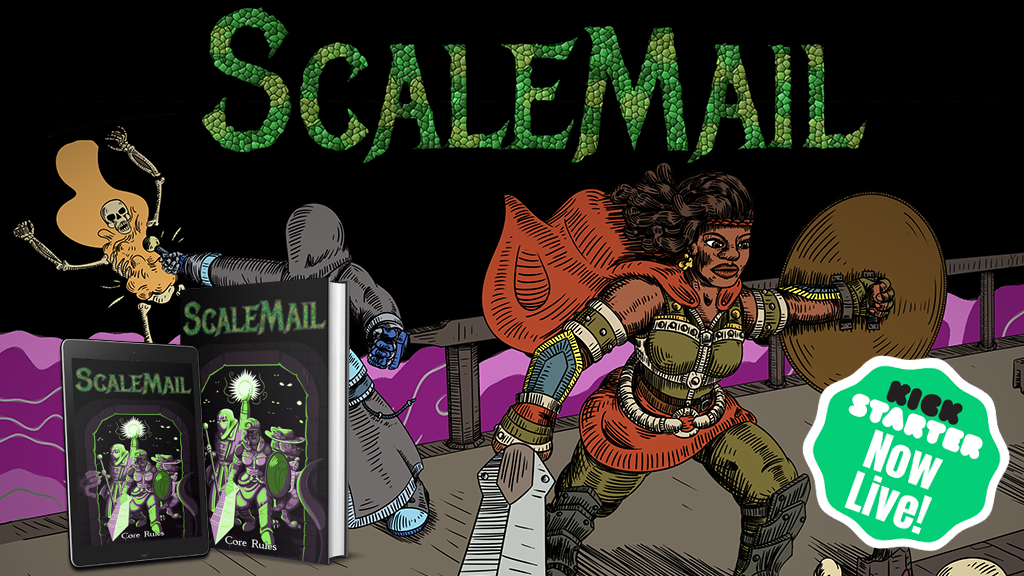
Scalemail by Earl of Fife Games
Scalemail RPG is live on Kickstarter! Scalemail is an exciting new rules-lite tabletop roleplaying game, in which players take on the roles of Adventurers seeking their fortunes in a wild and dangerous world. It uses simple rules that have been designed for quick resolution and easy acquisition, suitable for group and solo play and easy enough to teach new gamers. The core rulebook contains everything you need to play the game. Players have a diverse range of options at their fingertips to make whatever Adventurer they want to play, with 7 Ancestries, 17 different Paths to guide their career, and a wide array of magical spells and special talents to make their would-be hero unique. Narrators are given advice on running the game, tips to build their own stories, and a robust selection of traps and monsters to challenge the Adventurers. Adventure awaits in Scalemail! Now live on Kickstarter!
 https://www.kickstarter.com/projects/heroes-and-hardships/scalemail-a-tabletop-roleplaying-game?ref=n9870b

Subscribe to our newsletter!